
What is actually leaking? That question decides whether a water heater leak is a small repair or a replacement. Relief valves weep when they wear out or when household pressure runs high. Drain valves, especially the plastic ones found on many factory tanks, start dripping as they age. Fittings on top of the tank corrode where copper meets steel, and flexible connectors can crack or lose their seal. Condensation can mimic a leak for weeks on a gas unit or in a humid space. And sometimes the tank itself has rusted through. Across Reston, VA, we sort out which one you have before recommending a thing.
Finding the source is a process, not a glance. We clear and dry the area, then watch where new water appears. First we check the relief valve and the pipe it drains through, followed by the drain valve and the inlet and outlet fittings, where dielectric unions and flex connectors commonly fail. If the heater is gas-fired, we look inside the burner compartment, since water there can be condensation or a sign the tank has given out. When the relief valve is involved, we measure water pressure and check for proper thermal expansion control. We recommend nothing until the source is confirmed.
Most leaks are handled the same day we find them. We replace worn relief valves, swap plastic drain valves for durable brass ones, rebuild corroded connections, add or recharge an expansion tank, and install a pressure-reducing valve when street pressure runs high. If the tank itself is leaking, there is no safe patch, and you will hear that from us directly along with your replacement options. We also help prevent the next leak from doing damage: a drain pan piped to a proper drain, a water sensor or automatic shutoff valve, and a clear label on the shutoff. For water heater leak repair in Reston, call (703) 202-2745.
What homeowners call us about most is Water Heater Repair in Reston and Water Heater Replacement in Reston. Either is a good place to start.
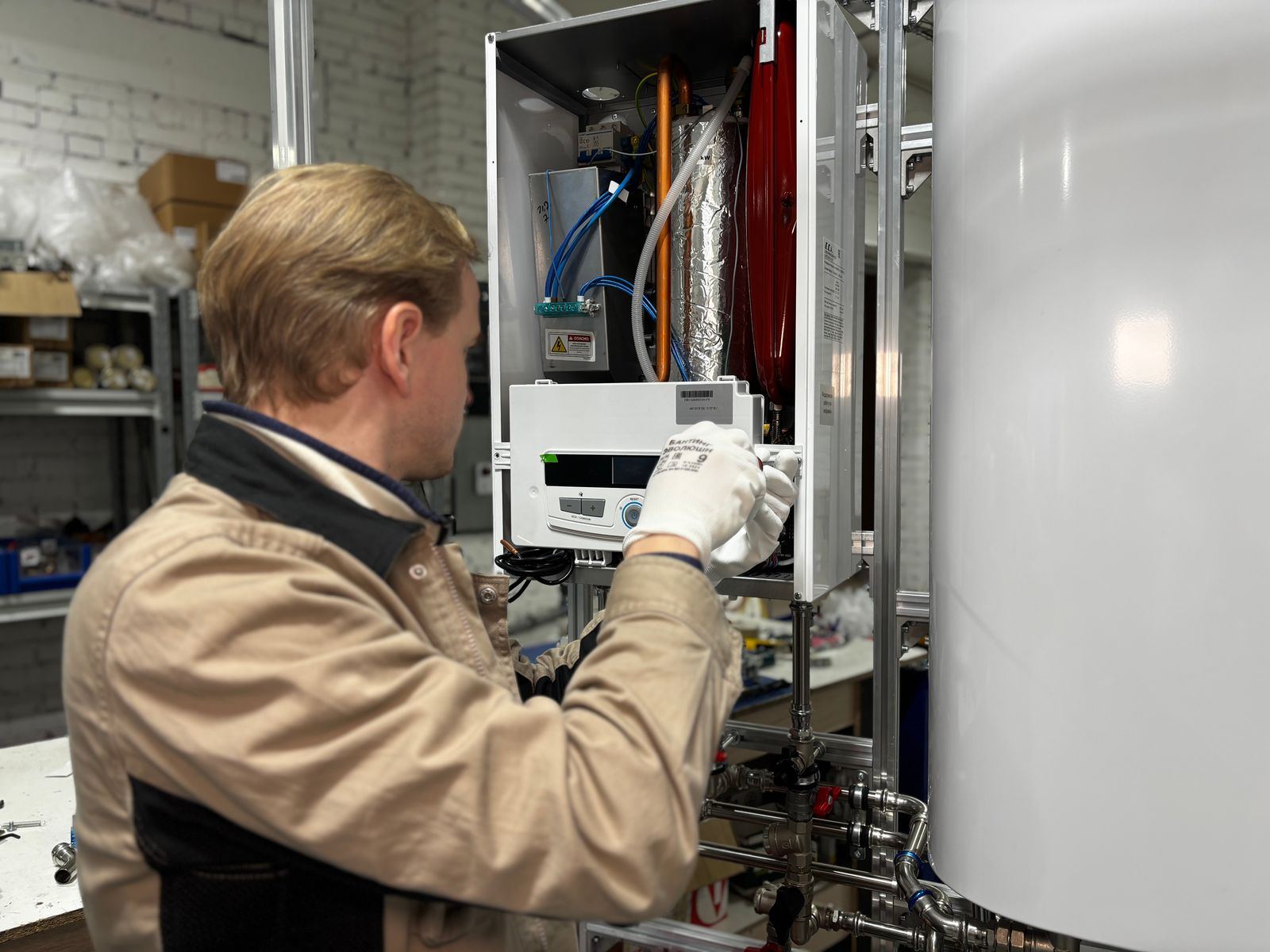
Signs You Need Water Heater Leak Repair in Reston
Water heaters usually give plenty of warning before they fail, as long as you know what to look and listen for. If any of the following sound familiar, it's worth having the unit checked:
- The water meter moving when nothing in the house is running
- Rusty or discolored hot water paired with dampness at the base
- A puddle or damp spot on the floor around the base of the tank
- Dampness in the combustion area of a gas unit
- Water stains, soft flooring, or musty smells near the heater closet
- Water dripping from the relief valve or out of the end of its discharge pipe
- Rust, green corrosion, or white crust on the fittings at the top of the tank
- A drain valve at the bottom of the tank that drips even when closed
Small Symptoms, Big Consequences
Most water heater failures start small: a popping sound from sediment, a damp spot under the drain valve, or a shower that goes lukewarm a few minutes sooner each week. At the first hint of a problem, reach out to Reston Water Heater at (703) 202-2745 and we'll take a look.
Water Heater Leak Repair FAQ
What a Trained Technician Brings to the Job
Most leak mistakes happen before any tool comes out. Water travels along pipes and the outer jacket before it drips, so the puddle rarely marks the source, and harmless condensation on a gas unit or a cold tank can pass for a leak. Guessing leads to replacing the wrong valve or, worse, missing a tank that is on its way out. The safety side matters as well: a relief valve that is discharging is protecting the tank, and plugging it invites a far worse failure. Old fittings can snap when forced, and water around a 240-volt electric heater is a real shock hazard.
The value of a professional is a confirmed answer. You get the true source, the right parts, and an explanation of why it failed. When a relief valve drips, we test pressure and expansion. When a fitting is rotten, we replace the connection rather than tightening it harder. When condensation is the only issue, we explain it and save you a repair. And when the tank itself is leaking, we recommend replacement honestly, with a drain pan, drain line, and leak alarm to limit damage if it ever happens again.
Step by Step: How a Visit Works
We work through a clear, repeatable process so you always know what's happening and what it will cost. Here's exactly how a typical visit unfolds:
Stop & Protect
We help you close the cold supply and shut off gas or power, then move valuables and set up containment so the damage stops spreading.
Pinpoint the Leak
Every likely source gets checked: T&P valve, drain valve, inlet and outlet fittings, connectors, condensation, and the tank itself. No part is swapped until the source is confirmed.
Check Pressure & Expansion
If a relief valve is involved, we measure static pressure and check for an expansion tank, since high pressure makes even new valves drip.
Repair, Refill & Verify
Repairs are tested, not assumed. We restore water and heat, check each joint, and suggest a drain pan or leak sensor where it would help. If the tank has failed, we explain replacement plainly.
Want a Professional Opinion?
Tell us the age, fuel type, and symptoms, and we'll help you sort out the next step.
Call (703) 202-2745 NowWater Heater Care Tips From Our Technicians
Most of the failures we see could have been delayed for years with basic upkeep. Start with these practical measures our team relies on:
- Check your water pressure; if it runs above about 80 psi, a pressure-reducing valve protects the tank and valves
- Inspecting the anode rod periodically is one of the best ways to delay a tank leak
- A properly drained pan under the tank catches small leaks before they reach your floors
- Glance at the heater monthly for damp spots, rust, or crust on the fittings
- Draining sediment every year helps the bottom of the tank last longer
- Put a water leak sensor on the floor next to the tank so a drip gets noticed early
- An expansion tank that is present and properly charged keeps the relief valve from opening every cycle
Should You DIY or Call a Pro?
Online videos may help in a pinch, yet lasting repairs and code-compliant installs depend on correct venting, proper relief valve discharge piping, and a trained technician. Here's a comparison:
| Factor | Doing It Yourself | Professional Service |
|---|---|---|
| Diagnosis | Guess based on where water collects | Surfaces dried and each source confirmed |
| Relief Valve | Valve capped to stop the drip, a serious hazard | Root cause fixed so the new valve stays dry |
| Old Fittings | Tightened until the fitting cracks | Corroded connections replaced with new fittings |
| False Alarms | Normal sweating treated as a leak | Only real problems get repaired |
| Water Damage | Floors left exposed to the next leak | Shutoff labeled and leak alarms suggested |
| Outcome | Source unconfirmed | Lasting fix, verified under pressure |
Book a Visit Today
The sooner you call, the sooner the hot water is back. Reach Reston Water Heater for fast service.
Call (703) 202-2745 NowWater Heater Leak Repair Across the Reston Area
Wherever you are in the area, the same experienced team shows up with the same parts and the same pricing. Find your community below.